A selection of our very best maths resources entirely free, updated each month.
Available for everyone, even expired accounts.
Autumn
Spring
Summer
Mar 1, 2026
📚 World Book Day
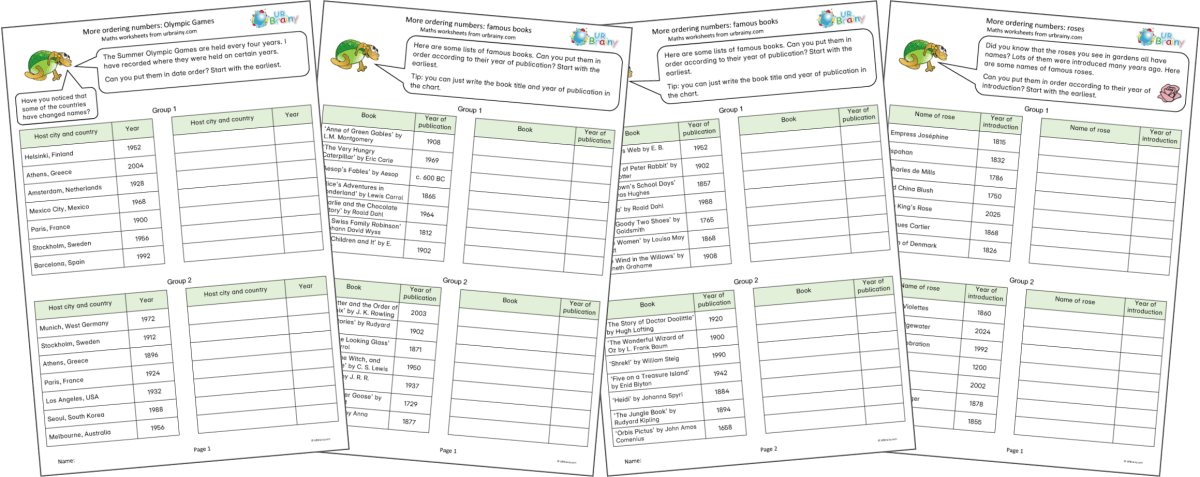
March 5th is World Book Day, a day designed to promote reading for pleasure and it is celebrated in over 100 countries worldwide.By reading books you not only enjoy the stories (hopefully!) but also stimulate your mind and creativity and improve your vocabulary. Books open our eyes to language and...
Feb 28, 2026
Year 6 Measuring Volume
Because space is three dimensional (it has length, width and height) we use cubic units to measure volume. In the metric system the main units of volume are: cubic millimetres or mm³ cubic centimetres or cm³ cubic metres or m³ a litre is also a metric measure of volume, which...
Feb 27, 2026
Measurement in Year 6
There are some very hard concepts involved with Measurement in Year 6. Conversion of units of measurement continues to be a key element, and it is suggested that converting between units such as kilometres and miles is done graphically. Converting metric units should be done with up to 3 decimal...
Feb 26, 2026
Measurement in Year 5
The metric system takes centre stage in the Year 5 Measurement Programme of Study, emphasising the importance of converting between different units of metric measures. By the end of Year 5 children should know the following relationships between metric units: 1 kilometre = 1,000 metres 1 metre = 100 centimetres...
Feb 25, 2026
Measurement in Year 4
Converting between units is an important part of the Year 4 Programme of Study for Measurement. For instance, children should be able to convert kilometres to metres or grams to kilograms, which needs a good knowledge of multiplying and dividing by 1,000. Calculating perimeters and finding the area of rectilinear...
Feb 24, 2026
Measurement in Year 3
We have a great range of worksheets covering measurement in Year 3. Children are expected to know certain facts, including: 1 kilometre = 1,000 metres 1 metre = 100 centimetres 1 kilogram = 1,000 grams 1 litre = 1,000 millilitres They are also expected to recognise half units, such as...
Showing 1 to 6 of 1928 results
The latest news, articles, and resources, sent to your inbox weekly.

© Copyright 2011 - 2026 Route One Network Ltd. - URBrainy.com 13.2.4